
Your shoulders are tight. Your jaw is clenched. You can’t remember the last time you took a deep breath without thinking about it. Stress has a way of creeping into your body before you even notice it’s there.
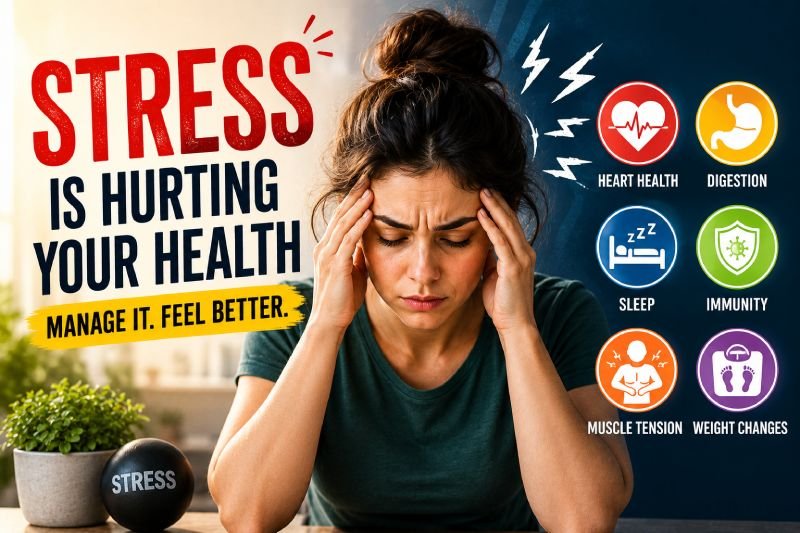
Most of us think of stress as a mental or emotional issue. But stress doesn’t stay in your head. It moves through your entire body, affecting your heart, your digestion, your sleep, and even your immune system.
Understanding the impact of stress on your physical health is the first step toward managing it. The good news is that small, practical changes can make a real difference. Let’s break down what’s actually happening in your body and what you can do about it.
What Happens in Your Body When You’re Stressed?
When you encounter a stressful situation, your body releases hormones like cortisol and adrenaline. This is often called the “fight or flight” response, and it’s designed to help you react quickly to danger.
Your heart rate increases. Your muscles tense up. Your breathing becomes shallow and quick. In short bursts, this response is helpful and even protective.
The problem starts when this response doesn’t switch off. Chronic stress keeps your body in a heightened state for days, weeks, or even months, and that takes a real toll over time.
1. Stress and Heart Health
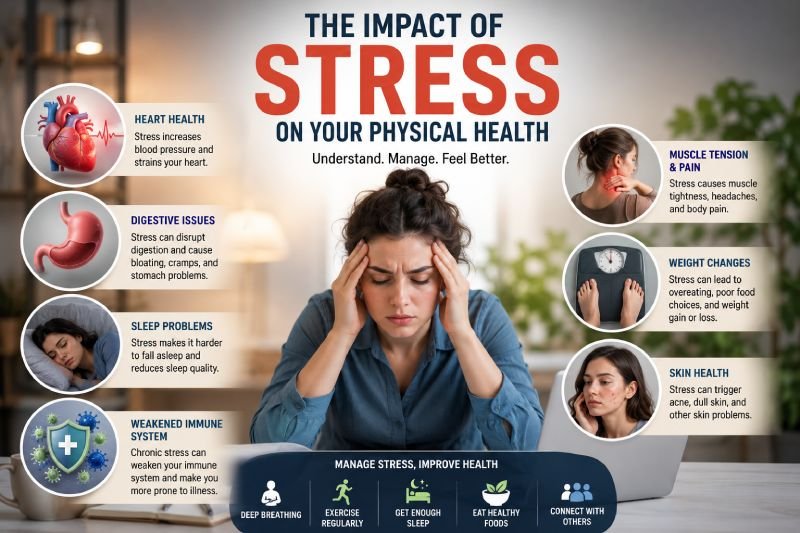
When cortisol and adrenaline stay elevated for long periods, they can contribute to higher blood pressure and increased strain on your cardiovascular system.
Over time, chronic stress has been linked to a greater risk of heart-related issues, partly because of these hormonal effects and partly because stress often leads to unhealthy coping habits like poor diet or smoking.
Supporting your heart means addressing stress directly, not just treating the physical symptoms that show up later.
2. Stress and Digestive Issues
Ever notice your stomach turns into knots before a big presentation? That’s not a coincidence. Your gut and brain are closely connected through what’s known as the gut-brain axis.
Chronic stress can disrupt digestion, leading to symptoms like bloating, stomach discomfort, or irregular bowel habits. Some people notice their appetite changes significantly during stressful periods, eating either much more or much less than usual.
Managing stress can be just as important for digestive comfort as watching what you eat.
3. Stress and Sleep Problems
Stress and sleep have a frustrating, circular relationship. Stress makes it harder to fall asleep, and poor sleep makes you more vulnerable to stress the next day.
Racing thoughts at bedtime, frequent waking, and restless nights are all common when stress levels are high. Over time, this cycle can leave you exhausted and even more reactive to daily stressors.
Breaking this cycle often starts with addressing stress earlier in the day, rather than only at bedtime.
4. Stress and a Weakened Immune System
Short-term stress can actually boost your immune response temporarily. But chronic stress works in the opposite direction, gradually suppressing your immune system’s ability to fight off illness.
This is part of why people under constant stress may notice they get sick more often or take longer to recover from colds and minor infections.
Your immune system relies on balance, and chronic stress throws that balance off in ways that build up over time.
5. Stress and Muscle Tension or Pain
That tight neck, that nagging headache, that ache between your shoulder blades—these are often physical manifestations of stress rather than separate issues.
When your body stays tense for extended periods, it can lead to chronic muscle tightness, tension headaches, and even jaw pain from clenching.
Stretching and movement can help, but addressing the underlying stress is usually necessary for lasting relief.
6. Stress and Weight Changes
Stress affects different people in different ways when it comes to weight. Elevated cortisol levels are often linked to increased appetite and cravings for high-sugar, high-fat foods.
For some, stress leads to emotional eating and gradual weight gain. For others, stress suppresses appetite entirely, leading to unintended weight loss.
Either pattern can disrupt your overall health, which is why managing stress is often part of a balanced approach to weight management.
7. Stress and Skin Health
Your skin often reflects what’s happening inside your body. Stress can trigger or worsen conditions like acne, eczema, and psoriasis through hormonal and inflammatory pathways.
Many people notice breakouts or flare-ups during particularly stressful weeks, even if their skincare routine hasn’t changed.
This connection is one more reason why stress management isn’t just about feeling calmer. It’s about supporting your whole body, inside and out.
How to Start Managing Stress Effectively
You don’t need to eliminate stress completely. That’s not realistic. The goal is learning to manage it so it doesn’t take over your physical health.
- Identify your stress triggers. Awareness is the first step toward change.
- Build in short breaks. Even five minutes away from a stressful task can help reset your nervous system.
- Prioritize sleep. Aim for a consistent bedtime, even when life gets busy.
- Move your body daily. Physical activity is one of the most effective natural stress relievers.
Start with one or two changes rather than trying to overhaul your entire routine at once.
Practical Techniques to Reduce Stress
A few simple practices can make stress more manageable on a daily basis.
- Deep breathing exercises. Slow, controlled breathing can calm your nervous system within minutes.
- Mindfulness or meditation. Even five to ten minutes a day can lower stress reactivity over time.
- Journaling. Writing down worries can help get them out of your head and onto paper.
- Connecting with others. Talking through stress with a friend or family member can ease its mental load.
These techniques work best when practiced consistently, not just during moments of high stress.
Common Mistakes People Make When Managing Stress
Even well-intentioned efforts to manage stress can backfire. Watch out for these common missteps:
- Relying only on caffeine or sugar. These offer short-term energy but can worsen anxiety and stress over time.
- Skipping sleep to “catch up” on tasks. This often increases stress rather than relieving it.
- Ignoring physical symptoms. Headaches, fatigue, and tension are signals worth paying attention to.
- Trying to do it all alone. Support from others is a valuable part of managing stress long-term.
Avoiding these pitfalls can make your stress management efforts more effective and sustainable.
Frequently Asked Questions (FAQ)
Can stress really cause physical symptoms?
Yes. Chronic stress can affect your heart, digestion, sleep, immune system, and even your skin through hormonal and nervous system pathways.
How long does it take for stress to affect your body?
Short-term stress is usually harmless. Physical effects tend to develop when stress becomes chronic, often after weeks or months of ongoing exposure.
What is the fastest way to reduce stress in the moment?
Deep, slow breathing is one of the quickest ways to calm your nervous system, often producing noticeable relief within just a few minutes.
Can exercise help reduce stress?
Yes. Physical activity helps lower stress hormones and triggers the release of endorphins, which can improve mood and reduce tension.
When should I talk to a doctor about stress?
If stress is interfering with your daily life, sleep, or physical health for an extended period, it’s worth discussing with a healthcare provider.
Conclusion
Stress isn’t just something you feel. It’s something your whole body experiences, from your heart and gut to your skin and sleep. Recognizing the impact of stress on your physical health is the first step toward taking it seriously.
The encouraging part is that small, consistent habits—deep breathing, movement, better sleep, and reaching out for support—can make a real difference over time.
You don’t have to overhaul your life overnight. Start with one small step today, and let it build from there.