
You stand up after hours at your desk and your back protests. Your shoulders feel like they’re carrying invisible weights. Your hips are stiff before you’ve even taken ten steps.
Most of us spend our days sitting, hunched over screens, or rushing through errands without giving our muscles a chance to move freely. Over time, this catches up with us.
Daily stretching is one of the simplest habits you can build to counter this. It takes just a few minutes, requires no equipment, and offers benefits that reach far beyond flexibility. Let’s look at what stretching really does for your body and mind.
What Happens When You Stretch?
When you stretch, you gently lengthen your muscles and the connective tissue surrounding them. This increases blood flow to the area and helps maintain or improve your range of motion.
Over time, regular stretching can help reduce stiffness, support better posture, and make everyday movements feel easier and more comfortable.
Your body adapts to whatever you do consistently. If you sit all day without stretching, tightness builds. If you stretch regularly, your body stays more mobile and responsive.
1. Improves Flexibility and Range of Motion
This is the most obvious benefit, but it’s worth understanding why it matters. Better flexibility means your joints can move through their full range without strain.
This becomes especially important as we age, since reduced flexibility can make everyday tasks like bending, reaching, or turning more difficult over time.
Regular stretching helps maintain the flexibility you have and can gradually improve areas that feel particularly tight.
2. Supports Better Posture
Sitting for long periods often leads to tight hip flexors, rounded shoulders, and a forward head position. Stretching can help counteract these patterns.
By loosening tight muscles and supporting better alignment, daily stretching can make it easier to maintain good posture throughout the day.
Better posture isn’t just about appearance. It can also reduce strain on your spine and supporting muscles.
3. Reduces Muscle Tension and Soreness
That nagging tightness in your neck or lower back is often a sign of accumulated muscle tension. Stretching helps release this tension by encouraging muscles to lengthen and relax.
For people who exercise regularly, stretching can also help ease post-workout soreness by promoting blood flow to tired muscles.
A few minutes of stretching at the end of the day can make a noticeable difference in how your body feels.
4. Supports Joint Health
Stretching helps keep the tissues around your joints supple, which supports smoother, more comfortable movement.
This is particularly valuable for joints that tend to stiffen with inactivity, like the hips, knees, and shoulders.
Regular movement through stretching can be a simple way to support long-term joint comfort and mobility.
5. Helps Reduce Stress
Stretching isn’t just physical. The slow, controlled movements involved in stretching can activate your body’s relaxation response, helping to lower stress levels.
Many stretching routines incorporate deep breathing, which further supports a sense of calm and reduces tension.
Taking even five minutes to stretch and breathe deeply can offer a meaningful mental reset during a stressful day.
6. Improves Circulation
Stretching encourages blood flow to your muscles, which supports the delivery of oxygen and nutrients throughout your body.
Better circulation can contribute to reduced muscle stiffness and may help your body recover more efficiently after periods of inactivity or exercise.
This benefit is especially helpful for people who sit for long stretches throughout the day.
7. Supports Better Sleep
A short stretching routine before bed can help signal to your body that it’s time to wind down. The relaxation response triggered by stretching may support easier, more restful sleep.
Gentle evening stretches, especially when paired with slow breathing, can help release the physical tension that often builds up during the day.
If you struggle to unwind at night, a brief stretching routine might be worth adding to your evening habits.
How to Start a Daily Stretching Routine
Building a stretching habit doesn’t require a major time commitment. Here’s how to get started:
- Start with five to ten minutes. A short, consistent routine beats an occasional long one.
- Focus on major muscle groups. Target your neck, shoulders, back, hips, and legs.
- Hold each stretch for 20 to 30 seconds. This allows muscles enough time to relax and lengthen.
- Stretch when your body is warm. After a walk or shower can be ideal times.
Consistency matters more than duration when it comes to building this habit.
Tips to Make Stretching Part of Your Daily Routine
A few small adjustments can help turn stretching into a habit that sticks.
- Pair it with an existing habit. Stretch right after brushing your teeth or before bed.
- Use a guided video or app. Following along can make the routine feel easier to commit to.
- Stretch while watching TV. Combine relaxation time with movement.
- Keep a simple routine. A handful of go-to stretches is easier to stick with than a long, complicated list.
The easier you make it to start, the more likely you are to keep going.
Common Mistakes to Avoid When Stretching
A few common errors can reduce the benefits of stretching or even lead to discomfort.
- Bouncing during stretches. This can strain muscles rather than relax them. Aim for slow, controlled movements instead.
- Stretching cold muscles too aggressively. Ease into stretches gradually, especially first thing in the morning.
- Holding your breath. Breathing deeply helps your muscles relax more effectively.
- Skipping stretching altogether on busy days. Even a quick two-minute session is better than none.
Avoiding these mistakes can help you get more comfort and benefit from your stretching routine.
Frequently Asked Questions (FAQ)
How long should I stretch each day?
Five to ten minutes of daily stretching is enough for most people to experience noticeable benefits over time.
Is it better to stretch in the morning or at night?
Both have benefits. Morning stretching can help reduce stiffness, while evening stretching can support relaxation and better sleep.
Can stretching help with back pain?
Stretching may help ease tension-related back discomfort, though persistent or severe pain should be evaluated by a healthcare provider.
Do I need to stretch before exercising?
Light dynamic stretching before exercise can help prepare your muscles for movement, while deeper static stretching is often more beneficial afterward.
Can stretching improve flexibility at any age?
Yes. While flexibility naturally decreases with age, consistent stretching can help maintain and even improve range of motion at any stage of life.
Conclusion
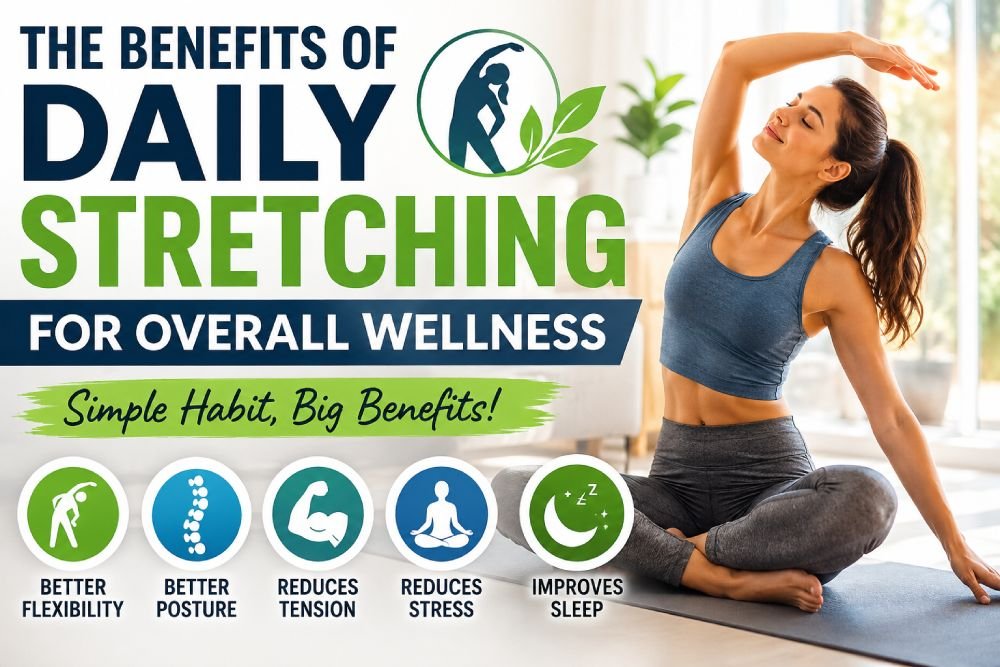
Daily stretching offers far more than improved flexibility. It supports better posture, reduces tension, eases stress, and may even improve your sleep quality.
Best of all, it takes just a few minutes a day and requires no special equipment or experience.
Start small. Pick a few stretches, set aside five minutes, and make it part of your daily routine. Your body will feel the difference sooner than you might expect.