
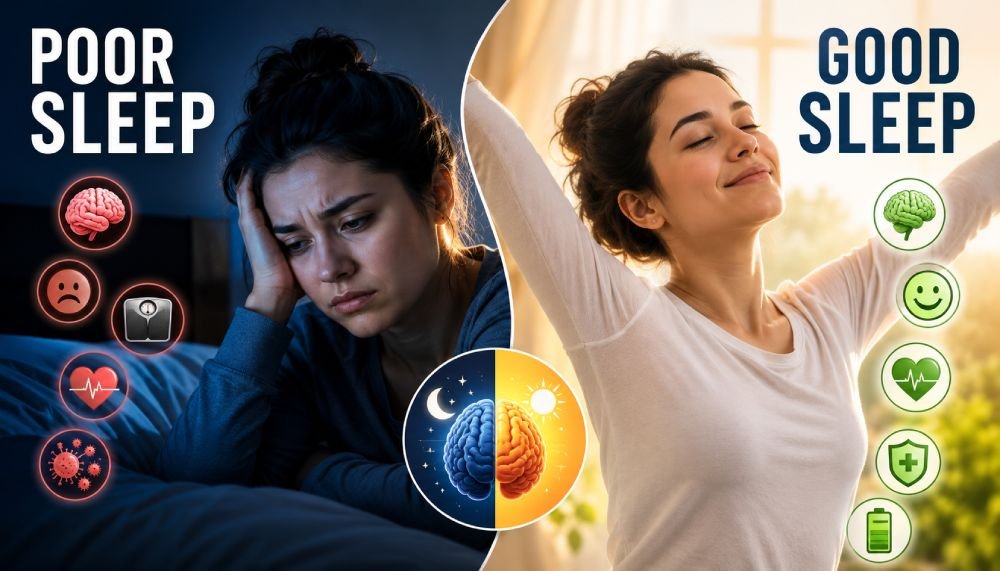
You hit snooze three times, drag yourself out of bed, and reach for coffee before you’ve even said good morning. If this feels like your daily routine, you’re not alone.
Millions of Americans don’t get enough quality sleep, and most don’t realize how much it’s affecting them. Poor sleep doesn’t just leave you tired. It touches nearly every system in your body and mind.
Understanding how poor sleep affects your body and mind can help you see why a good night’s rest matters so much. Let’s look at what’s really going on when sleep takes a back seat.
What Happens in Your Body During Sleep?
Sleep isn’t just downtime. It’s an active process where your body repairs muscles, consolidates memories, and balances hormones that regulate hunger, stress, and mood.
During deep sleep stages, your brain clears out waste products that build up during the day. Your immune system also gets to work, strengthening its defenses for the day ahead.
When sleep is cut short or disrupted, these essential processes don’t get to finish. Over time, the effects start to add up.
1. Poor Sleep and Heart Health
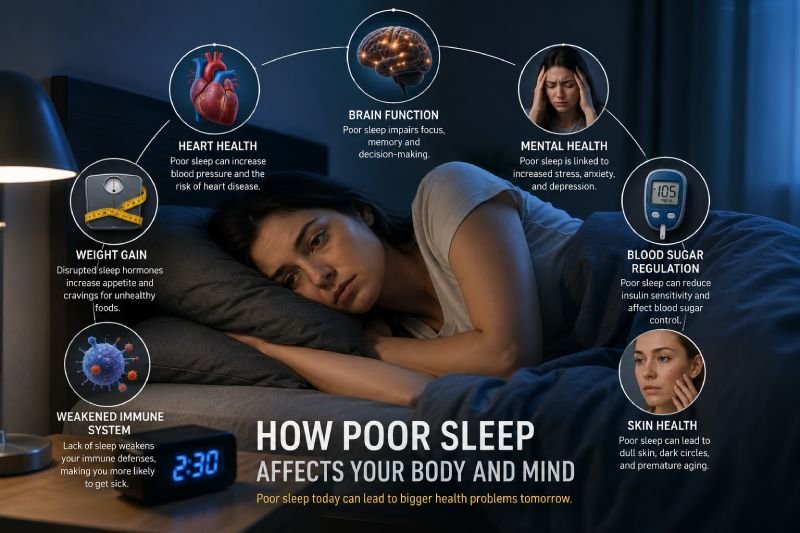
Sleep plays a bigger role in cardiovascular health than most people realize. During sleep, your blood pressure naturally dips, giving your heart a chance to rest.
When sleep is consistently poor, this nightly dip doesn’t happen properly. Over time, this has been linked to higher blood pressure and increased strain on the cardiovascular system.
Prioritizing sleep is one of the simplest ways to support long-term heart health alongside diet and exercise.
2. Poor Sleep and Brain Function
Ever notice how foggy your thinking feels after a bad night’s sleep? That’s not in your head, or rather, it is, but for a good reason.
Sleep is essential for memory consolidation, focus, and decision-making. Poor sleep can slow reaction times, reduce concentration, and make it harder to learn new information.
Even one night of poor sleep can measurably affect cognitive performance the next day, similar to the effects of mild alcohol impairment in some studies.
3. Poor Sleep and Mental Health
The connection between sleep and mood runs both ways. Poor sleep can worsen feelings of anxiety and low mood, while stress and anxiety can make it harder to sleep well.
Chronic sleep deprivation has been associated with increased emotional reactivity, meaning small frustrations can feel much bigger than they actually are.
Over time, ongoing poor sleep can contribute to a cycle that’s difficult to break without addressing sleep habits directly.
4. Poor Sleep and Weight Gain
Sleep and weight are more connected than many people expect. Lack of sleep disrupts hormones like ghrelin and leptin, which regulate hunger and fullness.
This often leads to increased appetite and cravings for high-calorie, high-sugar foods the next day. Poor sleep can also reduce motivation for physical activity, compounding the effect.
Getting enough quality sleep is an often-overlooked piece of a healthy weight management plan.
5. Poor Sleep and a Weakened Immune System
Your immune system relies heavily on sleep to function properly. During deep sleep, your body produces proteins called cytokines, which help fight infection and inflammation.
When sleep is consistently cut short, cytokine production can drop, making you more vulnerable to colds and other common illnesses.
People who sleep less than six hours a night tend to catch colds more often than those who get seven or more hours of sleep.
6. Poor Sleep and Blood Sugar Regulation
Sleep plays an important role in how your body processes glucose. Poor sleep can reduce insulin sensitivity, making it harder for your body to regulate blood sugar effectively.
Over time, chronic sleep deprivation has been linked to an increased risk of developing blood sugar-related health concerns.
This is one more reason why consistent, quality sleep deserves the same attention as diet and exercise.
7. Poor Sleep and Skin Health
“Beauty sleep” isn’t just a saying. During deep sleep, your body increases blood flow to your skin and produces collagen, which helps maintain skin elasticity.
Poor sleep can lead to a dull complexion, under-eye puffiness, and may even accelerate the appearance of fine lines over time.
Skin repair happens largely overnight, which means consistent sleep is one of the simplest ways to support a healthy, refreshed appearance.
How to Start Improving Your Sleep
Better sleep often comes down to consistent habits rather than a single fix. Here’s where to start:
- Set a consistent sleep schedule. Go to bed and wake up at the same time, even on weekends.
- Limit screens before bed. Blue light can interfere with your body’s natural sleep signals.
- Create a wind-down routine. Reading or light stretching can signal to your body that it’s time to rest.
- Watch your caffeine intake. Avoid caffeine in the late afternoon and evening.
Small, consistent changes tend to work better than drastic overnight overhauls.
Tips to Improve Sleep Quality
Beyond the basics, a few extra adjustments can make a noticeable difference in how well you sleep.
- Keep your bedroom cool and dark. Most people sleep best in a slightly cool, dim environment.
- Reserve your bed for sleep. Avoid working or watching TV in bed to strengthen the mental association with rest.
- Get natural light exposure during the day. This helps regulate your body’s internal clock.
- Limit naps to 20–30 minutes. Longer naps can interfere with nighttime sleep.
These small adjustments can add up to noticeably better rest over a few weeks.
Common Mistakes That Hurt Sleep Quality
Even people who try hard to sleep well sometimes fall into habits that work against them.
- Using alcohol as a sleep aid. It may help you fall asleep faster but often disrupts deeper sleep stages.
- Sleeping in on weekends. This can throw off your body’s internal clock and make weekday sleep harder.
- Ignoring an uncomfortable mattress or pillow. Physical comfort plays a real role in sleep quality.
- Checking the clock during the night. This can increase anxiety about not sleeping, making it harder to fall back asleep.
Avoiding these habits can make a meaningful difference in how rested you feel each morning.
Frequently Asked Questions (FAQ)
How many hours of sleep do adults need?
Most adults need between 7 and 9 hours of sleep per night for optimal physical and mental functioning.
Can poor sleep affect your mood the next day?
Yes. Poor sleep is closely linked to increased irritability, anxiety, and difficulty managing everyday stress.
Does poor sleep affect weight gain?
Yes. Lack of sleep disrupts hunger hormones, often leading to increased appetite and cravings for unhealthy foods.
How quickly can sleep affect your immune system?
Even a single night of poor sleep can measurably reduce immune function, though the effects become more significant with chronic sleep deprivation.
What is the best way to fix poor sleep habits?
Building a consistent sleep schedule, limiting screen time before bed, and creating a relaxing wind-down routine are some of the most effective starting points.
Conclusion
Poor sleep affects far more than how tired you feel the next morning. It touches your heart, your brain, your mood, your weight, and even your skin.
The encouraging news is that sleep is one of the most responsive habits you can improve. Small, consistent changes to your routine can lead to noticeably better rest within just a few weeks.
Tonight is a good night to start. Set a consistent bedtime, power down your screens a little earlier, and give your body and mind the rest they truly need.