
Vitamin D, often known as the “sunshine vitamin,” plays a vital role in keeping your body strong, energetic, and healthy. Yet, more than 1 billion people worldwide are deficient without even knowing it. The deficiency is so common because many people spend most of their time indoors, use sunscreen constantly, and do not consume enough vitamin D-rich foods.
Your body needs vitamin D for strong bones, immunity, muscle strength, mental balance, and overall wellness. When the levels drop, the body begins giving signals—subtle at first, then more noticeable.
Understanding the early symptoms is important because untreated vitamin D deficiency can lead to long-term issues like osteoporosis, chronic fatigue, depression, weak immunity, and hormonal imbalance.
Below is a detailed guide about the 7 early signs of vitamin D deficiency, their causes, and science-backed ways to improve your levels naturally.
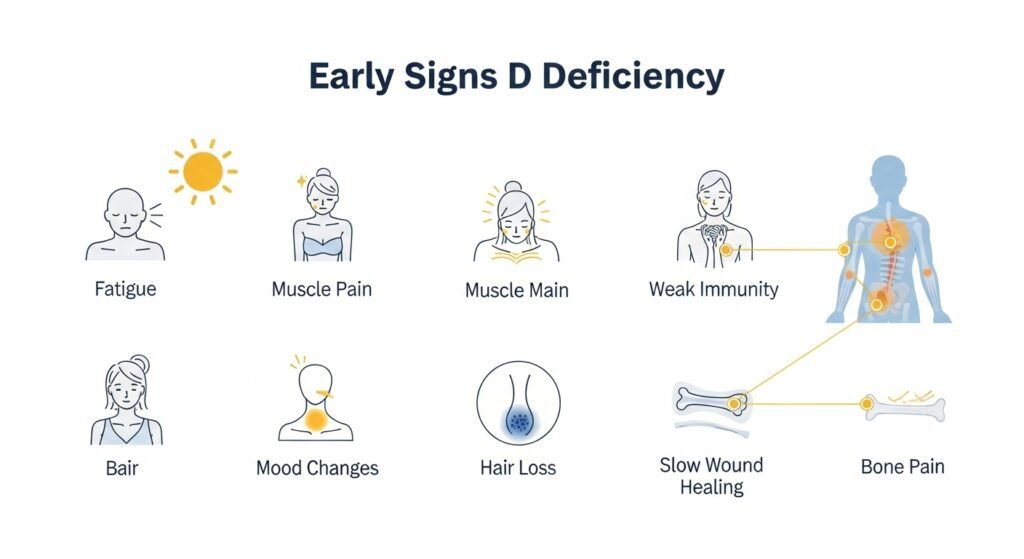
1. Constant Tiredness and Low Energy
Feeling tired even after getting full sleep is one of the earliest signs of vitamin D deficiency. Many people assume tiredness comes from stress or workload, but it can also be a nutritional deficiency.
Vitamin D plays a direct role in energy production inside the cells. When your levels are low:
- The body produces less energy
- You feel fatigue throughout the day
- Simple tasks feel more draining
- The brain feels foggy or unfocused
If you’re experiencing long-lasting fatigue without a known cause, getting your vitamin D checked may provide answers.
2. Muscle Pain, Weakness, and Cramps
Vitamin D deficiency can affect muscles in several ways. It helps muscles contract properly and supports calcium absorption. When levels are low, people may notice:
- Frequent body aches
- Lower back pain
- Muscle stiffness
- Leg cramps, especially at night
- Weak grip strength
Many adults complain of unexplained lower back pain, which is actually one of the most common symptoms of low vitamin D.
If your body feels sore without an injury or workout, vitamin D might be the reason.
3. Getting Sick More Frequently
Vitamin D is essential for a strong immune system. It activates the cells that fight viruses, bacteria, and infections. When your levels drop, immunity becomes weaker.
People with low vitamin D often experience:
- Frequent colds
- Repeated throat infections
- Slow recovery from flu
- More seasonal allergies
If you are getting sick more often than usual, your body might be signaling a drop in vitamin D levels.
4. Mood Swings, Irritability, or Feeling Low
Vitamin D directly influences the areas of the brain responsible for mood regulation. It supports serotonin production—the hormone that makes you feel calm and positive.
Low vitamin D levels may cause:
- Low mood
- Nervousness or irritability
- Anxiety-like symptoms
- Lack of motivation
- Feeling mentally drained
Many people experience mood dips during winter because sunlight exposure decreases—a condition known as Seasonal Affective Disorder (SAD).
If you often feel emotionally low without a specific reason, vitamin D deficiency may be a factor.
5. Hair Loss or Slow Hair Growth
Hair loss is usually linked to stress, hormonal imbalance, or genetics, but research shows that severe vitamin D deficiency can also lead to hair thinning.
Vitamin D is involved in new hair follicle growth. When levels drop:
- Hair becomes weaker
- Growth slows down
- Shedding increases
- Bald patches may appear in severe cases
If you notice more hair falling while combing or washing, consider checking your vitamin D levels.
6. Bone Pain or Weakness in Legs and Hip
Vitamin D is essential for healthy bones because it helps the body absorb calcium properly. When the levels fall:
- Bones become weaker
- There is pain in the legs, ribs, and hips
- Adults may develop osteomalacia (soft bones)
- Fracture risk increases
Bone pain caused by deficiency often feels like deep, dull aching and gets worse at night.
If you frequently feel discomfort while walking or standing, low vitamin D may be responsible.
7. Slow Healing of Cuts and Wounds
Vitamin D plays a major role in controlling inflammation and repairing tissues. Very low levels can delay wound healing.
People may notice:
- Cuts take longer to close
- Bruises stay visible longer
- Skin injuries heal slowly
- Increased skin infections
If your wounds are healing slower than usual, this is a warning sign you should not ignore.
What Causes Vitamin D Deficiency?
There are several reasons why people develop low vitamin D levels:
✔ Limited exposure to sunlight
Spending most of your time indoors is the biggest cause.
✔ Darker skin tone
Melanin reduces the skin’s ability to produce vitamin D naturally.
✔ Poor diet
Not eating enough vitamin D-rich foods.
✔ Obesity
Fat cells trap vitamin D and reduce its availability in the body.
✔ Digestive issues
Conditions like IBS, celiac disease, or Crohn’s affect absorption.
✔ Kidney or liver problems
These organs help convert vitamin D into its active form.
Understanding the root cause helps you correct your deficiency more effectively.
How to Increase Your Vitamin D Levels Naturally
- Get 15–20 Minutes of Sunlight Daily
- Eat Vitamin D-Rich Foods
- Consider Vitamin D Supplements
- Maintain a Healthy Weight
Final Thoughts
Vitamin D deficiency is extremely common but easily treatable. By recognizing the early symptoms, making lifestyle changes, and seeking timely treatment, you can protect your bones, immunity, mood, and long-term health.
If you notice any of the symptoms mentioned above, consider checking your levels and taking action. Your body needs vitamin D for energy, strength, and a balanced mind—so don’t ignore its warning signs.